Is It Better To Take A Food Tour Or Eat On Your Own?
A plain comparison of guided food walks against eating independently in Auckland: what each does better on time, discovery, price basis and group size.
Eating in Auckland is not hard. The city centre alone stacks a fish market food court, micro-breweries, pie shops and serious restaurants within a walkable grid, and anyone with a map app and an appetite can put together a decent food day for free. So the question worth asking is not whether you can eat well alone, you plainly can, but what a guided walk adds that a self-built route cannot. That is a decision about time, discovery, how you prefer to pay and who you are travelling with, and it has a different answer for different travellers.
The comparison below sticks to what the tour listings themselves state: durations, meeting points, group caps, what is included and who each format suits. Where a factor depends on your own appetite or pace, it says so rather than pretending there is one right answer.
Is It Better To Go On A Tour Or On Your Own?
A tour wins when you have one block of time, want a guide to decode unfamiliar food, and prefer one upfront per-person price covering every tasting; going alone wins when you want to control the pace, the budget and the menu, and when your group has needs a fixed route may not serve. Neither is always cheaper, because the two spend money differently: a tour buys a curated package, solo eating buys exactly what you order.
The honest framing is that these are not rival versions of the same product. A guided walk is a structured tasting route with commentary, a set start time and a group cap; eating on your own is an open-ended graze across whatever you find. The first trades freedom for efficiency and context, the second trades efficiency for freedom. Travellers who feel short on time or unsure which neighbourhood holds the good stuff tend to come out ahead on a tour, and travellers who already know what they want to eat, or who are working around a restriction, tend to do better alone.
All three run about three hours, which is roughly the window a solo eater would need to hit four or five places anyway, so the real difference is not the time spent but how that time is spent.
One more framing point before the detail. Auckland is hilly, the walks move between neighbourhoods, and the weather can turn, all factors that nudge the decision toward whichever option handles disruption better. A guided walk has an operator behind it with a bad-weather plan; a solo day has you, an umbrella and a willingness to reroute. Neither is a dealbreaker, but knowing which kind of traveller you are answers most of this question before any price is discussed.
What A Guided Walk Gives You That Solo Eating Cannot
The three things a tour delivers that independent eating cannot are a pre-tested route of stops, a guide who explains what you are eating and where it came from, and guaranteed access, with tables held, orders pre-arranged and tastings already paid for, which removes every queue, wait and menu-guessing decision from your afternoon. That is the product you are buying, and it is real.
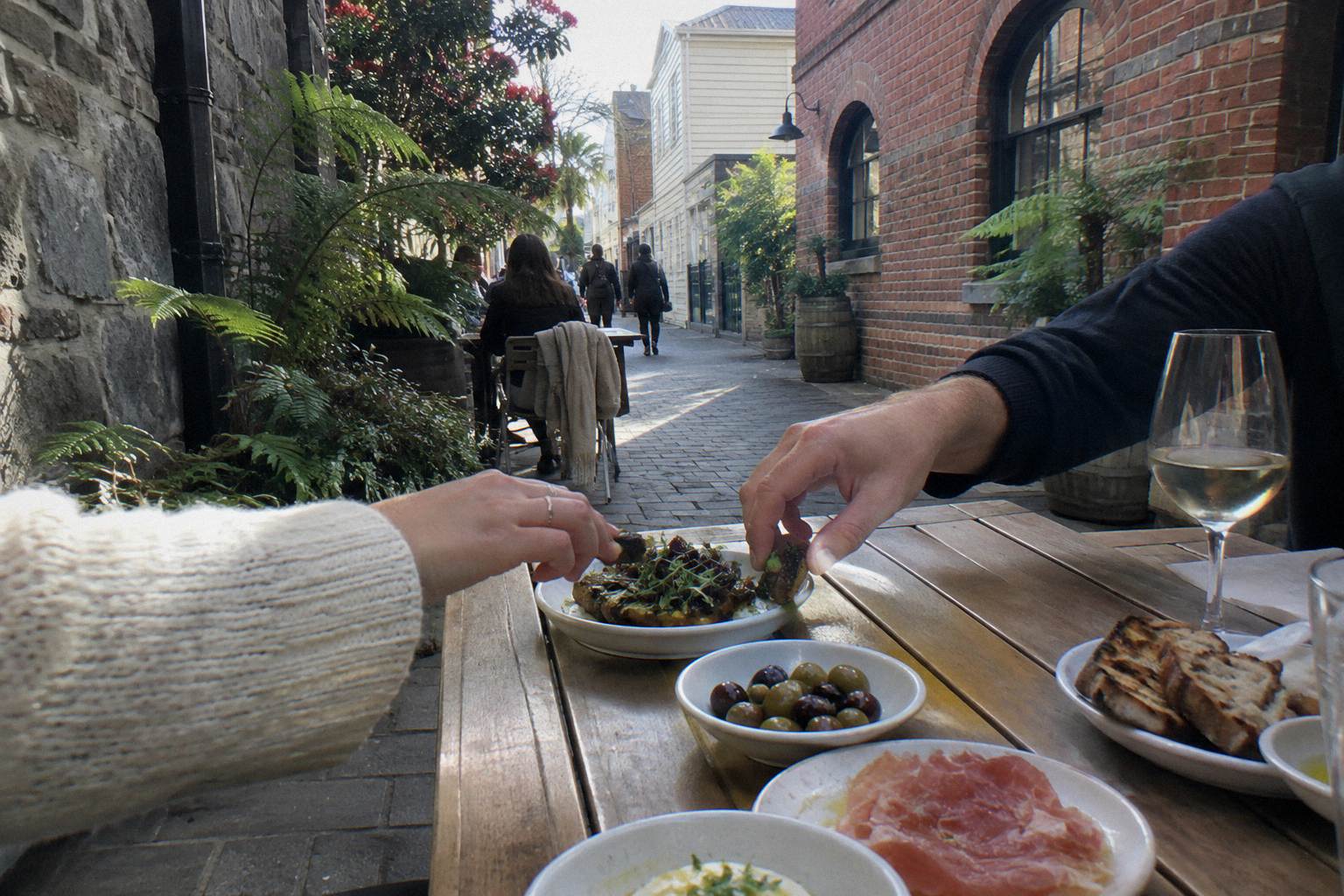
The route is the underrated part. A good operator has already discarded the mediocre stops; you inherit only the survivors. The listing for the City Centre Walk, Kiwi Classics describes guided tastings at several stops across the city centre, cheeses, restaurant dishes, Kiwi classics and chocolate, which is a spread of places a first-time visitor would struggle to assemble in one afternoon without inside knowledge. The guide also carries context: why the pie matters, what makes a flat white local rather than generic, which dish traces back to which tradition. That layer of explanation simply does not exist when you order alone.
Access is the second pillar. On a walk, stops expect the group, portions arrive together, and nobody in your party spends ten minutes negotiating a menu in a hurry. For solo travellers there is a social bonus too: a shared walk puts you at a table with up to a dozen other people, which is not nothing in a city where you otherwise eat alone. The guides also handle the boring logistics, holding the first stop fifteen minutes for late guests in the case of one operator's stated policy, and moving a weather-cancelled walking tour to a driven format where possible rather than simply refunding and abandoning your afternoon.
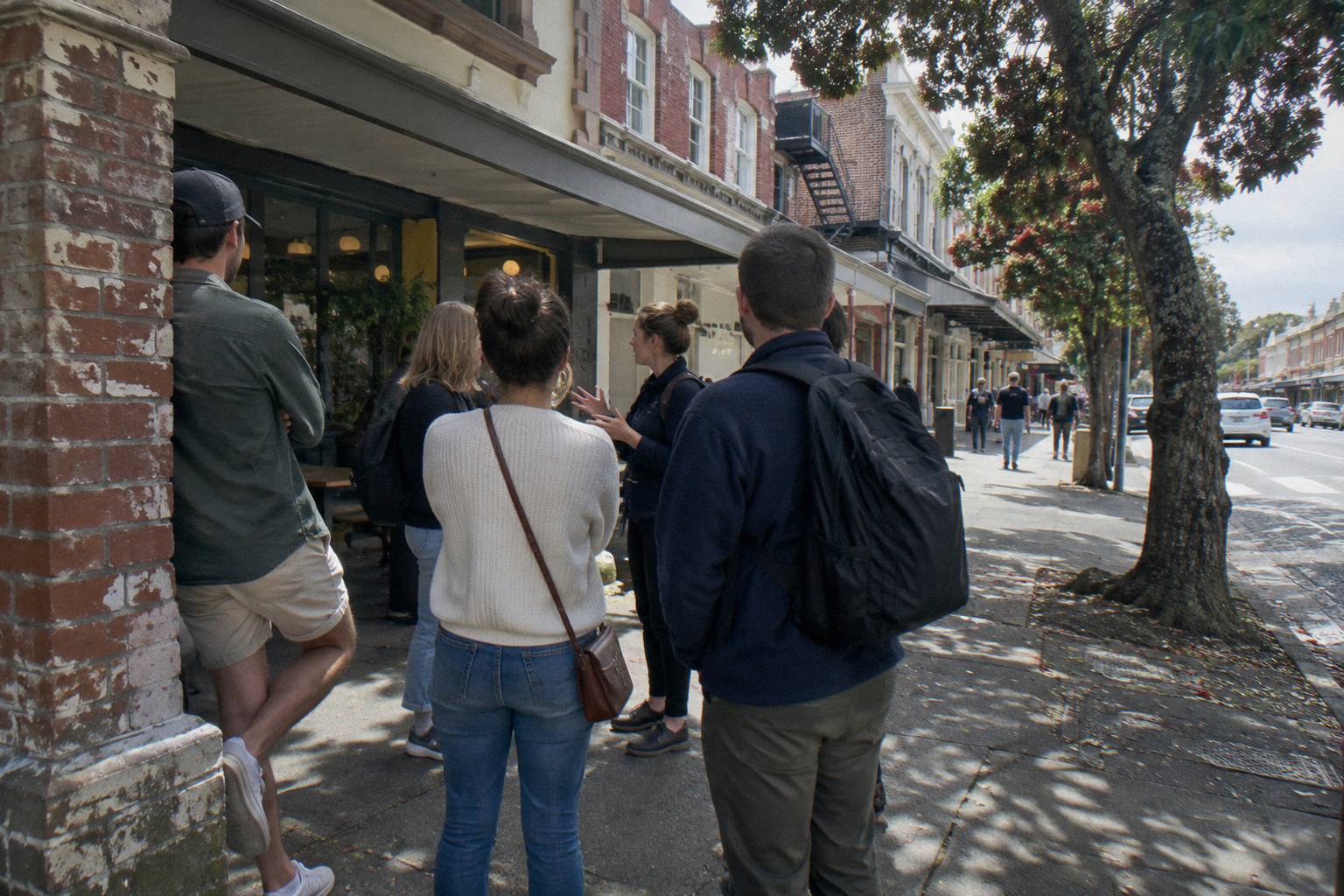
If the guide-led format appeals, more detail on how these walks work day to day sits in how a guided food tour actually runs, from meeting point to final stop.
| What the walk provides | How it shows up on the day | What solo eating looks like instead |
|---|---|---|
| A tested route | Several vetted stops in sequence | Your own research, hit or miss |
| A guide's commentary | Context on each dish and stop | Menus and search results |
| Pre-arranged tastings | Food arrives without ordering | You order, then wait |
| A fixed group cap | A known group size, often 10 to 16 | Whoever is beside you |
| Weather fallback | Operator may switch to a driven tour | You reroute yourself |
What Eating On Your Own Does Better
Going alone wins on control: you set the start time, choose every single dish, spend exactly what each item costs rather than a fixed per-person rate, stop when full, extend when hungry, and skip anything that does not suit a diet, a mood or a tight budget in a way no fixed route can match. Freedom is genuinely valuable, and it is the one thing a tour never sells.
The price basis deserves a clear-eyed look. A tour is one upfront payment per person covering all tastings, which makes budgeting trivial but makes portion control impossible: light eaters subsidise their own fullness. Solo eating is pay-as-you-go, so a modest appetite costs modest money and a big one costs big money. Neither basis is cheaper by definition, they just charge different people differently. The solo route also lets you redistribute spend, skip lunch to afford one extraordinary dinner, without anyone's schedule caring.
Dietary control is the second solo advantage. One operator states plainly that many of its tours cannot accommodate dietary restrictions and asks guests to email before booking; another says vegetarian options are standard but other needs depend on notice, and some tours cannot manage at all. Eating alone, by contrast, you simply order what suits you at every stop, no notice period, no negotiation. If anyone in your group has a serious restriction, that asymmetry alone can settle the whole question. The trade is that you lose the guide's local knowledge of where the restriction-friendly versions of a dish actually live, which is why the answer differs by traveller.
Pace and serendipity matter too. A walk commits you to its stops, in its order, on its clock. Solo, you can linger ninety minutes over coffee because the place is lovely, or abandon a street after ten flat minutes. That flexibility is exactly what some travellers travel for.
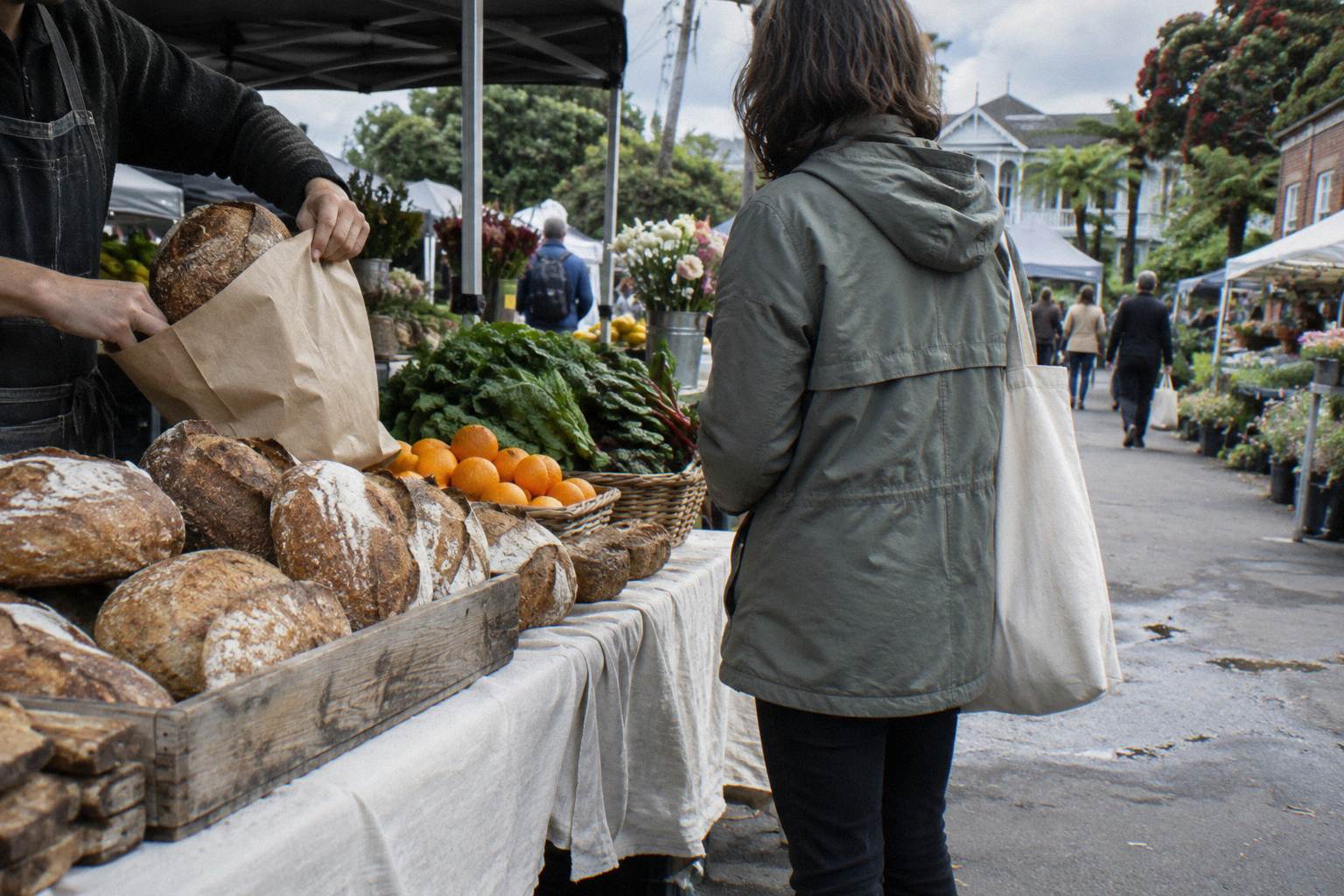
There is also a spontaneity dividend that rarely gets counted. A solo eater can follow a smell, join a queue of locals outside a bakery, or accept an invitation to a suburban night market, venues the official schedule places in Kelston, Albany, Botany, Henderson and beyond on weekday evenings from 5pm. No fixed route can chase that kind of accident, and for some travellers those unplanned stops become the stories they keep. A tour, by design, cannot improvise; its value is precisely that it does not have to.
How The Two Options Compare On Time
A guided walk compresses discovery into a fixed window of roughly three to four hours for the city formats, starting at a stated time from a stated meeting point, while eating alone stretches across whatever hours you give it, with no start time to hit and no finish time to respect, so the tour buys efficiency and the solo day buys elasticity, and the right choice depends on which of those your itinerary is short of.
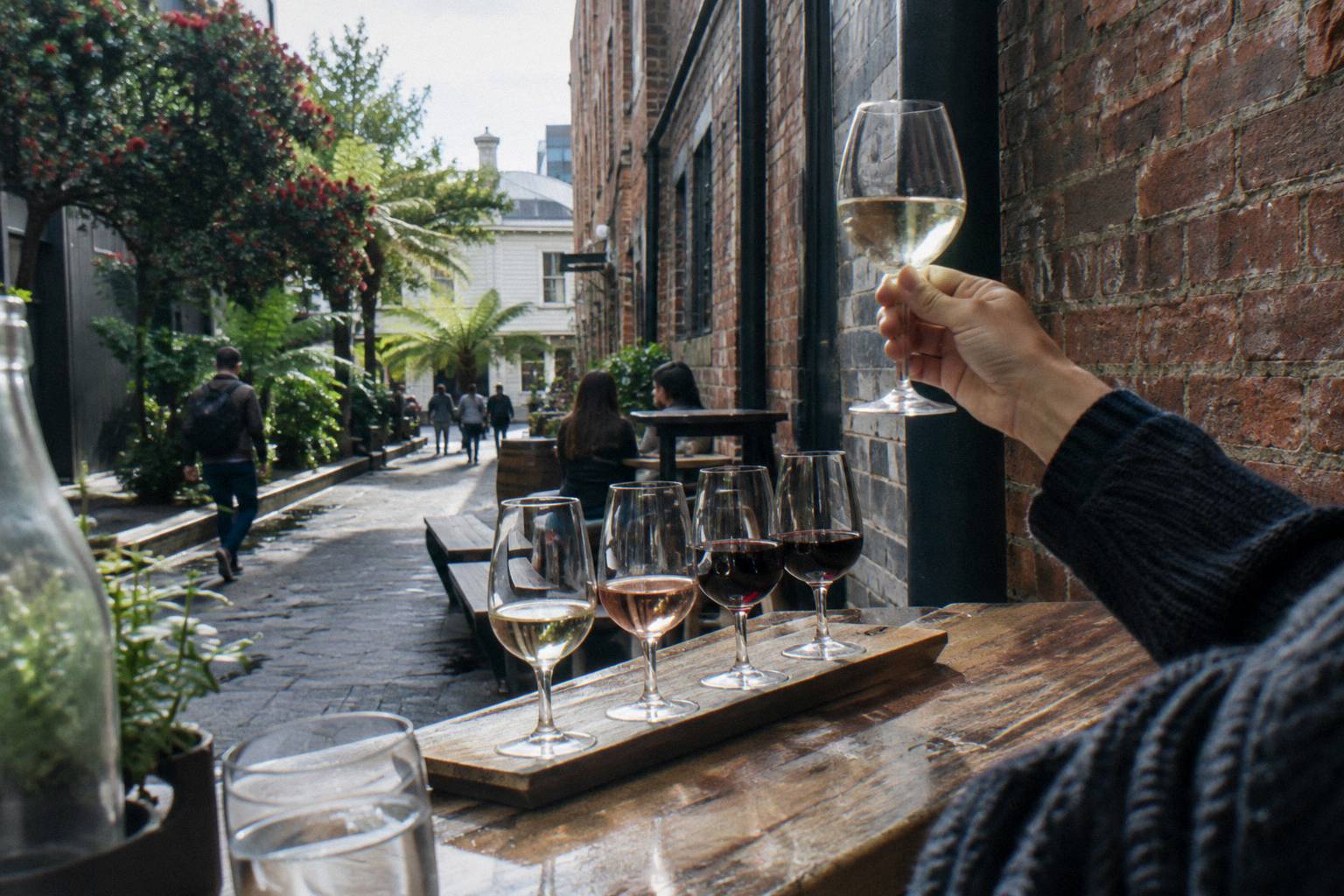
The listed numbers make the comparison concrete. The city centre walk runs about three hours from 2:30 pm outside the iSite at 188 Quay Street. Secret Food Tours runs 3 to 3.5 hours daily from 10:00 am at the Sky Tower. The driven Tastebud Tour runs about four hours from 9:30 am, and the Kumeu wine day runs about 5.5 hours. Those are known quantities: you can plan dinner, a ferry or a show around them with confidence. A solo food day has no such floor or ceiling, which is freedom on a good day and drift on a bad one. Other pages covering the same trip are gathered on Auckland Food Tour.
Time also behaves differently inside the window. A walk front-loads its efficiency because nothing needs deciding; the guide walks, you follow, food appears. Solo time leaks into decisions, walking between places you chose from a search page, waiting for orders, discovering the famous place is full. Solo eaters who research well can match a tour stop-for-stop, but they are doing the tour operator's preparation work themselves, on holiday.
A subtlety worth naming: the tour's fixed window includes the walking between stops, the waiting at each counter and the commentary, none of which you pay for separately because none of it is optional. The solo day bills you only for food, but charges you time for everything around it. Travellers who feel rich in time and poor in funds lean solo; travellers rich in funds and poor in time lean guided. Most holiday itineraries quietly answer this question for you before you do.
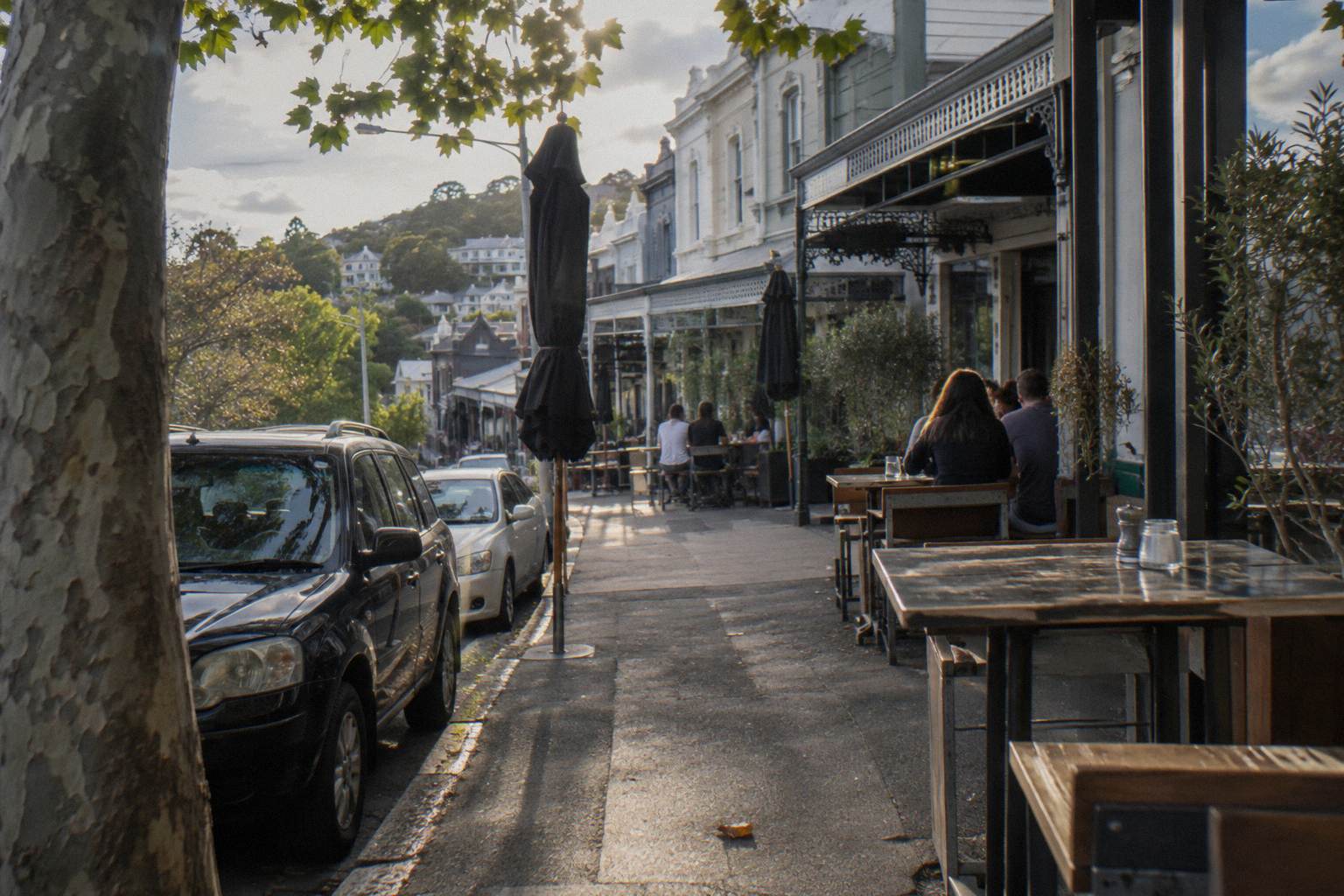
For help weighing the formats generally rather than just the timing, the guide to choosing between food tour formats breaks the decision into the same factors used here.
Group Size And Who You Are Travelling With
Group size cuts both ways: tours cap numbers, one at 16 maximum, another at 12, which keeps the walk intimate and the tastings flowing, while eating alone has no cap and no minimum, suiting a family of six with mixed ages better than a fixed 3 pm slot, though several tours do state child policies, including free spots for the youngest, and adults-only rules on the wine formats.
The caps matter more than they sound. A walk with a maximum of 12 or 16 is small enough that everyone hears the guide, fits into tasting rooms and moves at one pace. The same walk with a family pushing strollers, one operator notes many of its tours are not wheelchair or stroller accessible, can become a logistics problem, and Auckland's hills make the pushing harder. Solo eating has no such friction: big groups, small groups, babies and grandparents all just order food.
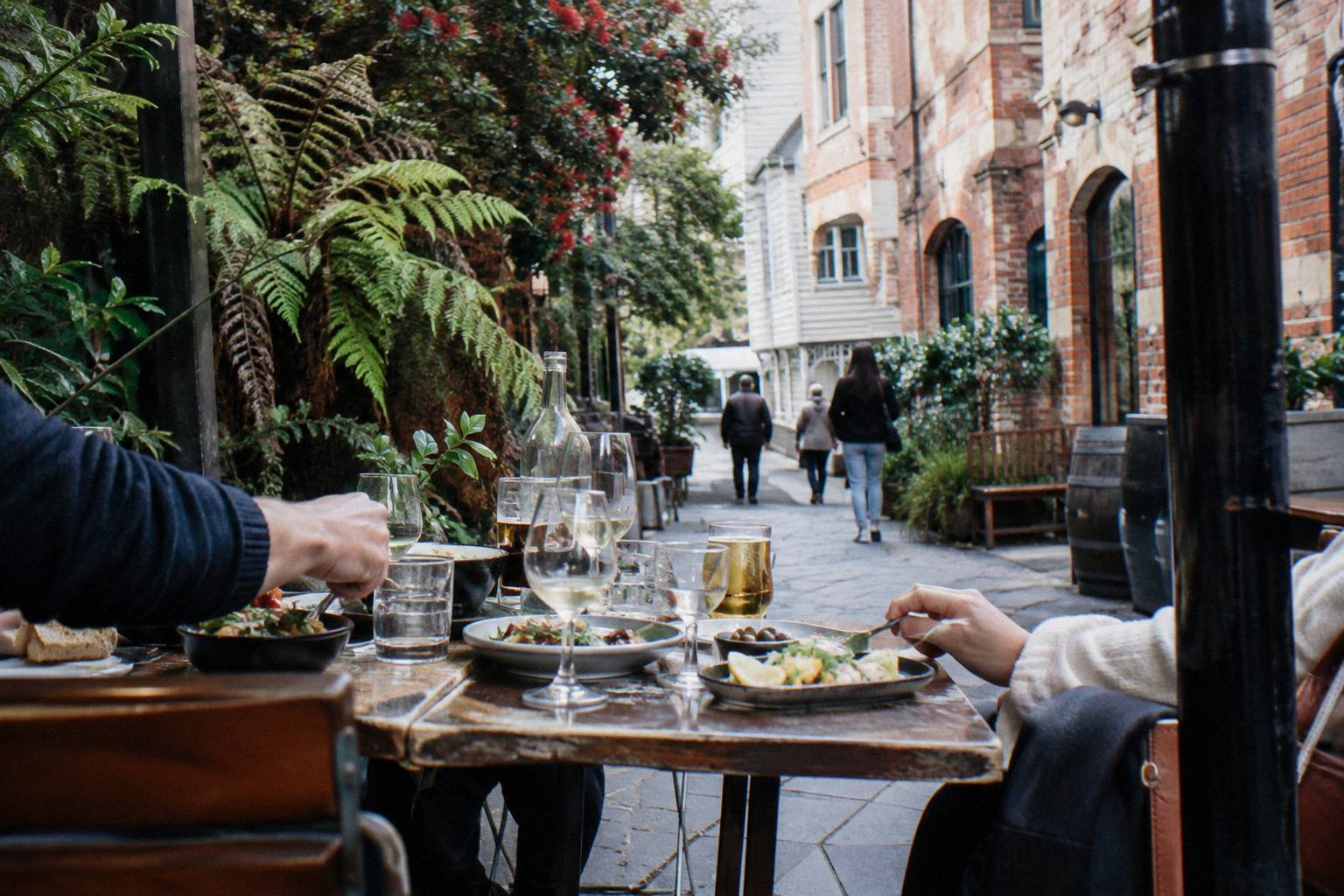
Children are the clearest dividing line. One operator states children under three who are not tasting join free, though a ticket is still required; another welcomes children free at ages two and under; the driven Tastebud Tour states it is not suitable for under 16s; and the Waiheke wine days are 18 and over outright. Families with mixed ages should read the child policy before anything else, and the practical breakdown lives in which food tours work for kids and groups. If no policy fits your group, solo eating sidesteps the entire question.
Group composition also changes what a tour is worth. A couple on a short city break gets the discovery benefit in full; a group of eight friends already has its own company and may find a shared walk constraining rather than social. And anyone booking as a pair should note the minimums, several tours require at least two guests to run, so a single traveller may need to check availability more carefully than a duo.
When The Tour Clearly Wins, And When Going Alone Does
A tour wins when you have half a day, no local knowledge, a curiosity about what the food means rather than just how it tastes, or a wish to meet people. Go alone when you already know the dishes you want, a dietary restriction is non-negotiable, the budget must flex hour by hour, or the wandering itself is the point.
| Your situation | The option that fits | Why |
|---|---|---|
| First visit, limited time | Guided walk | Route and stops pre-solved |
| Curious about food culture | Guided walk | Guide carries the context |
| Travelling solo, want company | Guided walk | Small group built in |
| Strict dietary restriction | Eat alone | Order exactly what suits |
| Tight, flexible budget | Eat alone | Pay per item, stop anytime |
| Slow, wandering day planned | Eat alone | No clock, no fixed route |
Between the two poles sit the hybrid travellers: people who take one walk early in the trip to learn the city's food map, then eat solo for the rest of it, using the guide's stop list as a personal shortlist. That is arguably the best of both, one paid afternoon of orientation followed by days of self-directed grazing, and it is a pattern worth considering if the budget allows a single tour.
The Secret Food Tours Auckland route{: rel="noopener"} is a good example of the orientation asset: its five stops and secret dish are exactly the kind of intel a solo eater reuses for days afterward. Likewise the operator's own page for the city centre walk{: rel="noopener"} lays out what the route covers for anyone deciding whether the map matches their interests.
Dietary Needs, Kids And Cancellations: The Fine Print
The fine print favours going alone whenever a dietary need is firm, because operators ask for notice, some state they cannot accommodate restrictions at all, and one says to email before booking, whereas booking your own meals needs no permission; on cancellations the picture reverses, with several listings offering free cancellation up to 24 hours ahead, which a string of individual restaurant bookings never provides.
The dietary rules are worth quoting by behaviour rather than by brand. One operator confirms vegetarian options on its walks but says other needs are met only with enough notice and that some tours cannot manage them. Another states many tours cannot accommodate dietary restrictions at all and asks guests to email before booking. The Waiheke gourmet day caters dietaries if notified before travel but is stated as not suitable for vegans. None of this is hostile, it is arithmetic: fixed routes with pre-ordered food cannot rewrite a menu on arrival. A solo eater with an allergy simply orders differently, every time, with no notice and no risk.
Cancellation is the mirror image. Several listings state free cancellation up to 24 hours in advance for a full refund, which converts a booked afternoon into a reversible decision, and one operator states a weather-cancelled walking tour is moved to a driven one where possible rather than lost entirely. The operator's own cancellation policy page{: rel="noopener"} for the Waiheke format shows the stricter end of the spectrum, full payment due inside 48 hours, worth reading before any island booking. Individual restaurants hold no such symmetry: a missed solo dinner just costs whatever it costs.
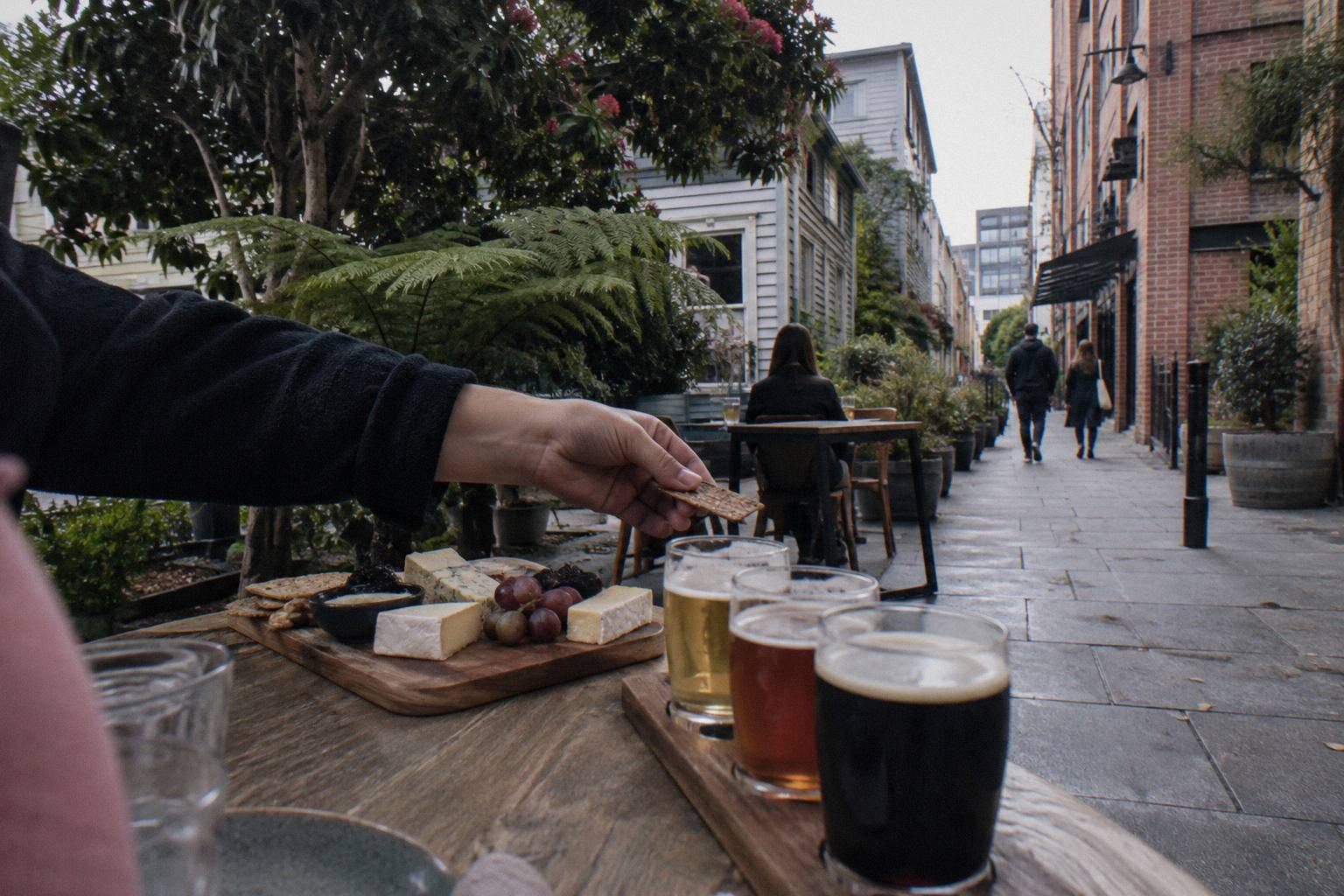
One practical note closes the loop. Whatever you decide, book the guided half of it with the same care you would give a restaurant reservation: check the meeting point, the start time and the dietary window before paying, the same three checks a solo eater makes instinctively before walking out the door.
Common Questions About Tour Or Solo Eating
Is It Better To Go On A Tour Or On Your Own?
It depends on what the day is for. A tour suits a fixed window, no local knowledge and a curiosity about the food's context; eating alone suits control over pace, budget, menu and dietary needs. Neither wins outright, they optimise for different travellers.
Do I Need To Book A Food Tour In Advance?
Yes, in general. Walks have small caps, one maximum of 12, another 16, and start at stated times from stated meeting points, so same-day spots are not guaranteed. Booking ahead also locks in the free-cancellation windows several listings offer up to 24 hours before departure.
Is A Food Tour Cheaper Than Eating On My Own?
Not necessarily in either direction. A tour is one fixed per-person rate covering all tastings, which suits big appetites; solo eating charges per item, which suits small ones. The comparison is on price basis rather than price level, since each spends money differently.
Can I Do Both On One Trip?
Yes, and it is a strong pattern. Take one guided walk early in the stay to learn the city's food map and stop list, then reuse that knowledge eating solo for the remaining days, with the guide's route as a personal shortlist.
What If Someone In My Group Has A Dietary Restriction?
Check before booking. Operators ask for notice, some tours cannot accommodate restrictions at all, and one asks guests to email before booking. If the restriction is firm, eating alone removes the risk entirely, because every order is under your control.