Auckland Cooking Classes: What To Know And Which Food Tour Pairs With Them
A cooking class teaches technique; a guided walk teaches the city. Here is how the two compare in Auckland and which tasting tours pair with a morning at the stove.
Short answer
A cooking class in Auckland is a hands-on session, typically half a day, where you cook and then eat what you make. A guided tasting walk covers more ground: the City Centre Walk costs NZ$225 for about three hours, and the Kumeu Wine Day runs NZ$375 for about 5.5 hours with lunch.
A cooking class asks you to stand still and learn a dish. A guided tasting walk asks you to keep moving and taste a city. Both answer the same appetite, and a lot of travellers booking an Auckland cooking class end up wanting the second thing as well, once they realise how much of the local food scene sits outside any single kitchen. This page sets out what a class experience generally involves, how it differs from a guided walk in structure, cost basis and time, and which tasting tours on this site pair well with a class morning or afternoon.
One honest note up front: no cooking class is sold on this site, and none of the operators in the tour cards here runs one. What is compared below is the format of a class against the format of a guided tasting tour, using the published figures for the tours that exist here. Anything about classes is general planning guidance, not a listing, and no class names, prices or hours are claimed. Where a class attribute is being described generically, it is framed as what the format usually involves, because kitchens differ as much as restaurants do.
What An Auckland Cooking Class Actually Teaches You
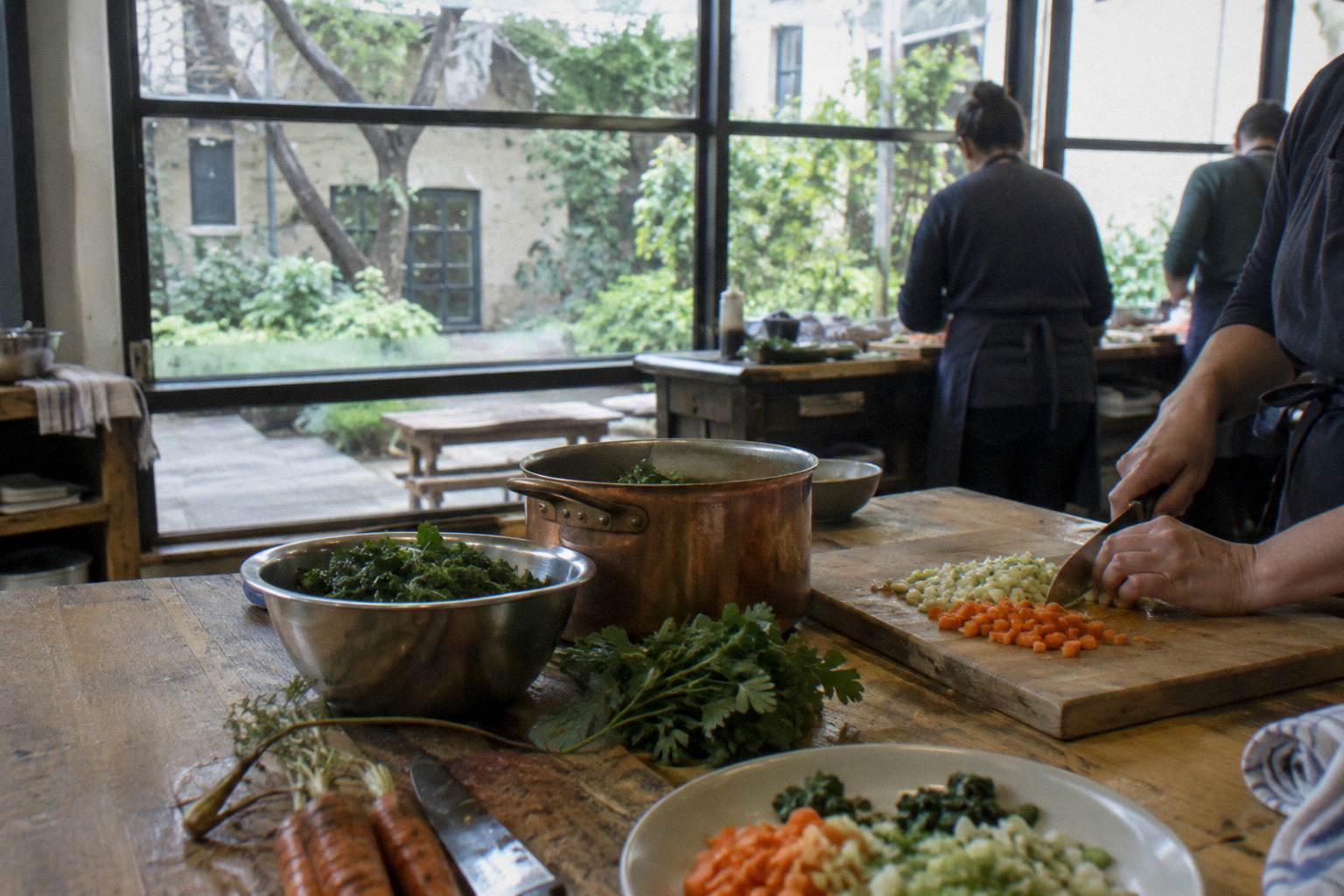
A cooking class is a participation format: you are given a station, a recipe and a teacher, and you leave with a technique rather than a route. Classes typically run half a day, are capped by the number of workstations, and end with the group eating the meal it prepared together. That social, sit-down finish is the single biggest structural difference from a tasting walk.
The value of a class is repetition. You learn to fold, season or steam something you can make again at home, which is why classes suit travellers who want a souvenir that is a skill rather than an object. The pace is slow by design. There is one venue, one menu and one long table.
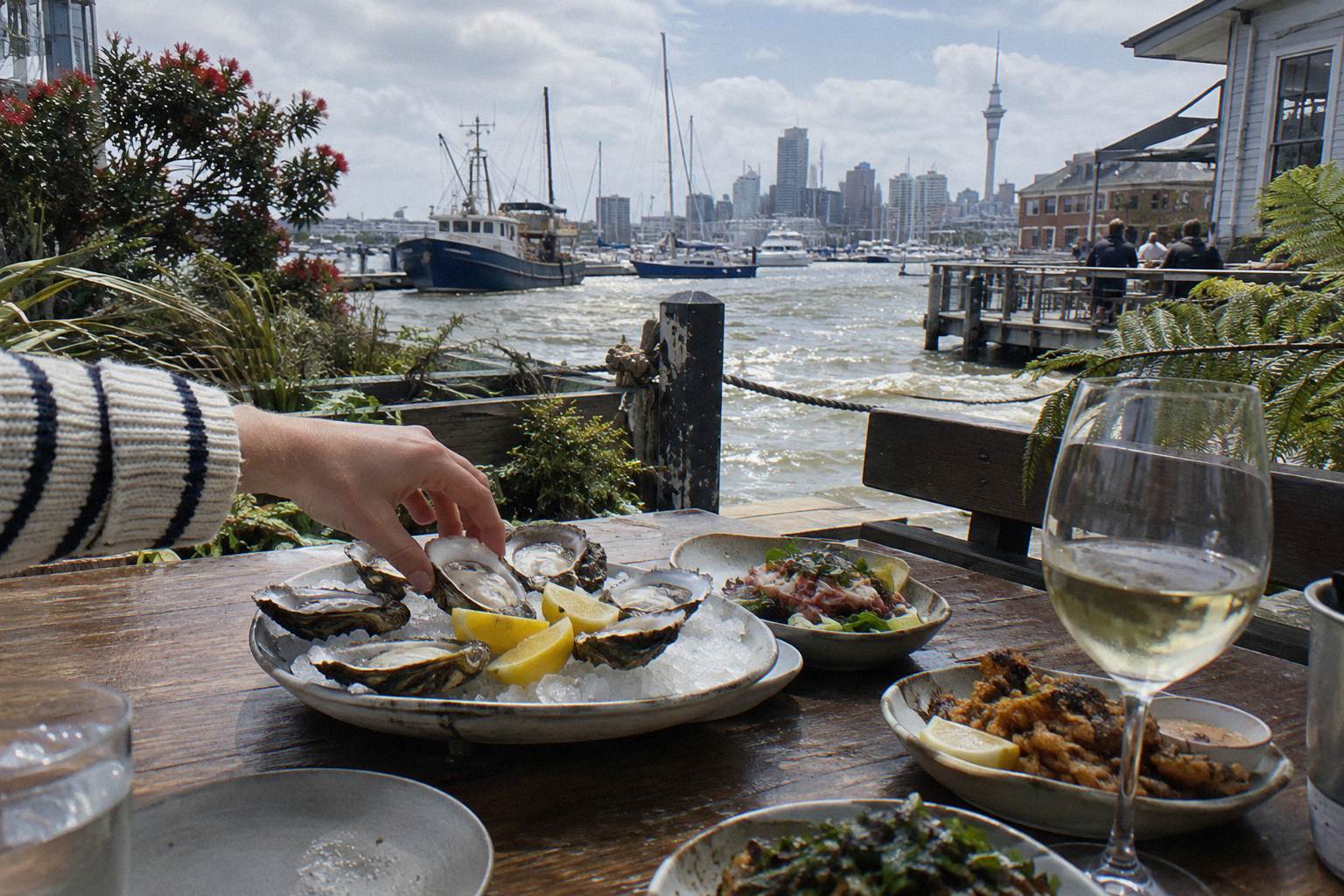
What a class cannot do is show you a city. A kitchen has four walls. If the goal is to understand why Auckland eats the way it does, where the markets are, what a Kiwi classic tastes like at source and how the waterfront fits together, you need to move through it. That is the argument for pairing the two formats rather than choosing between them, and it is the reason this site exists.
The pairing logic is simple: book the class for the technique, book the walk for the map. A reader weighing how to choose a food tour against a class is really weighing depth against breadth, and most two-day visitors have room for both if the timings are planned sensibly. The sections below give the comparison and the timings.
A quick way to test which format you actually want: picture yourself a month after the trip. If the thing you want to be doing is cooking the dish again for friends at home, the class wins. If the thing you want is to know your way around a foreign food city, to walk into the right bakery and order with context, the walk wins. Neither answer is wrong, but the two purchases serve different futures, and knowing which future you are buying saves a disappointing booking.
How A Cooking Class Compares With A Guided Tasting Walk
The two formats differ on almost every axis that matters to a buyer: who does the work, how much ground is covered, what the price buys and how the eating happens. A class is one venue, one menu and your own hands. A tasting walk is five or more stops, someone else's cooking and a guide narrating the city between them. Neither is better; they answer different questions.
The table below sets the formats side by side in general terms. Where a figure is specific to a real tour sold on this site, the tour sections later in the page carry the exact numbers.
| Aspect | Cooking class | Guided tasting walk |
|---|---|---|
| Your role | You cook, guided by an instructor | You walk and taste; guides do the talking |
| Venues | One kitchen | Several stops across a district |
| Food quantity | A full meal you prepared | Many smaller tastings |
| Skill takeaway | A recipe and a technique | Local food knowledge and orientation |
| Physical demand | Standing at a bench | Walking, sometimes 1.8 km or more |
| Best for | Travellers who want to cook at home | First-time visitors mapping the food scene |
The tours sold here are all on the walk-and-taste side of that table, and the strongest example is the City Centre Walk, Kiwi Classics: about three hours, NZ$225 per person, meeting outside the iSite at 188 Quay Street, with guided tastings at several city-centre stops covering cheeses, restaurant dishes, Kiwi classics and chocolate. It is rated 4.8 from 257 reviews. The operator's own page for the walk is at Flavours of Our City.
A second distinction worth naming is the failure mode. A class that does not suit you tends to fail slowly: a menu you did not want, a pace that drags. A walk that does not suit you fails on fit: too much walking, wrong district, dietary needs the stops cannot handle. Both are avoidable by reading the format details before booking, which is exactly what the rest of this page helps with.
There is a social difference too. A class builds a small group into a working kitchen team over hours, and strangers often leave as acquaintances, because you have chopped something together. A walk keeps the group looser: people chat between stops, drift apart, regroup over a tasting. For solo travellers who want conversation, the class kitchen is the more intense of the two. For couples and families who want a shared experience without obligation, the walk is the easier fit.
Which Food Tour Pairs Best With A Class Morning
Pair by clock, not by theme. Most classes occupy a morning or an afternoon block, so the pairing that works is the tour whose start time does not collide. The City Centre Walk starts at 2:30 pm, which pairs with a morning class. The Secret Food Tours walk starts at 10:00 am, which suits an afternoon or evening class. The Kumeu Wine Day at 9:30 am is a day-long commitment and wants its own day.
The thinking behind each pairing:
Afternoon walk, morning class. The 5 Tastings, Secret Dish walk by Secret Food Tours starts daily at 10:00 am, runs 3 to 3.5 hours and ends where it began at the Sky Tower, so it hands you back to the city by early afternoon. Cook in the evening or the next morning. It costs NZ$199.99 per person and includes a meat pie, fish and chips, an Afghan biscuit and a secret dish, plus a tasting of three local beers and a flat white. Note the dietary caveat honestly: the operator says many of its tours cannot accommodate dietary restrictions, so email before booking.
Morning walk, afternoon class. The City Centre Walk's 2:30 pm start is the friendliest slot for anyone with a morning commitment. Its operator FAQ answers most pairing questions directly at The Big Foody's FAQ page, including dietary notice periods and the under-three rule.
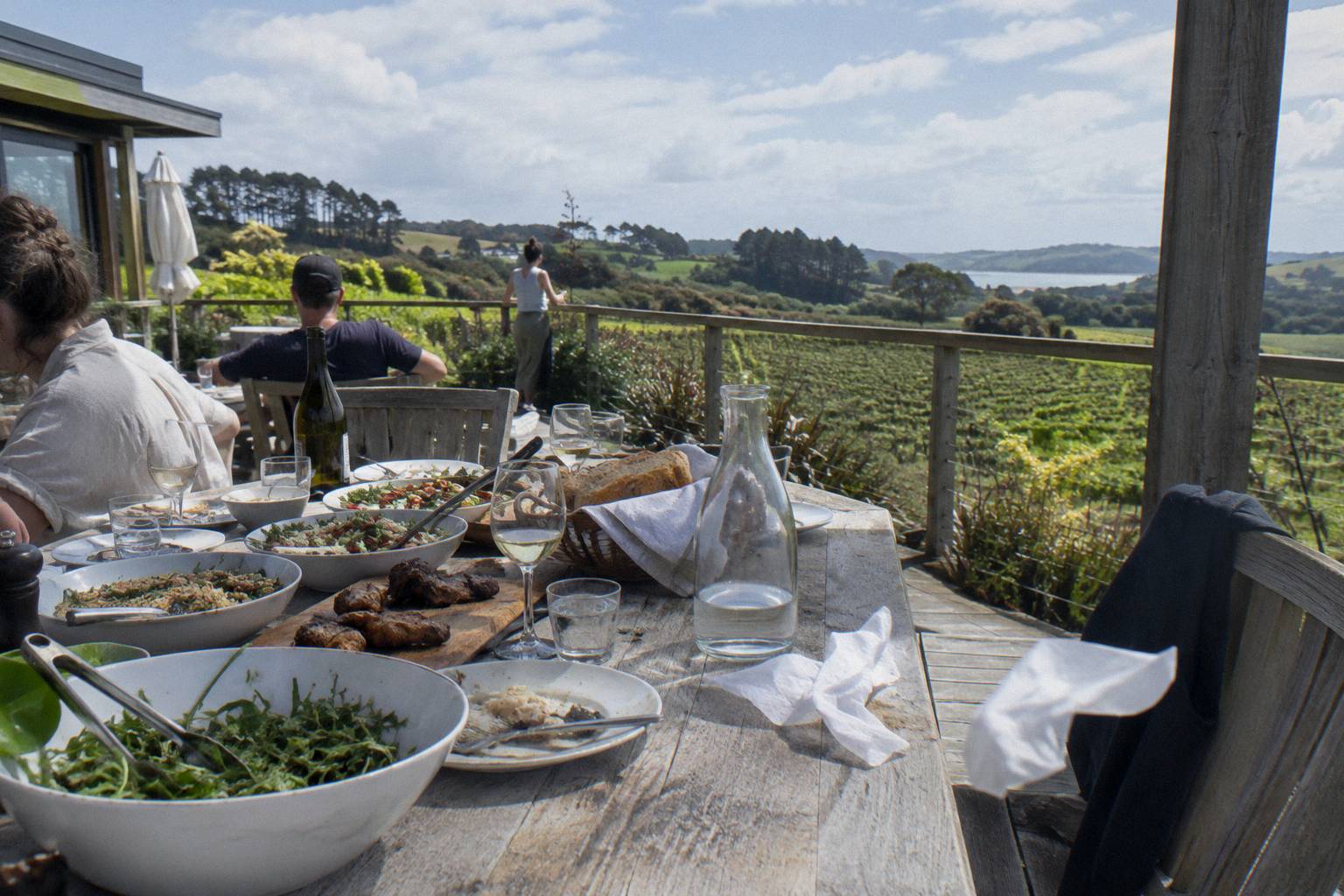
Full day, no class. The Kumeu Wine Day, BBQ Lunch runs from 9:30 am to about 3:00 pm, picks up in the Auckland CBD, and includes a farm shop stop, Kumeu tastings, a BBQ lunch on the deck and a Muriwai Beach stop, with wine, beer, gin and whisky tasting. Details are on the operator's page for A Place at Our Table. Do not try to bolt a class onto this one.
One more pairing consideration: appetite overlap. A class ends with a full meal. If you eat that meal at 1:00 pm, a 2:30 pm tasting walk will be a stretch for some people and a pleasant graze for others. Know your own appetite, and if in doubt give the class and the tour separate days.
Cost, Time And Group Size At A Glance
Three guided formats bracket the class question by price: NZ$199.99 for the Secret Food Tours walk, NZ$225 for the City Centre Walk, and NZ$375 for the Kumeu Wine Day with lunch and tastings included. Durations run from about three hours to about 5.5 hours. Group caps range from 12 to 20, which affects how much a guide can interact with you personally.
| Tour | Format | Price per person | Duration | Start | Group size |
|---|---|---|---|---|---|
| City Centre Walk, Kiwi Classics | Walking, CBD | NZ$225 | About 3 hours | 2:30 pm | Min 2, max 16 |
| 5 Tastings, Secret Dish | Walking, CBD | NZ$199.99 | 3 to 3.5 hours | 10:00 am daily | Max 12 |
| Driven Food Tour, Light Lunch | Driven, city and markets | NZ$265 | About 4 hours | 9:30 am | Min 2, max 10 |
| Kumeu Wine Day, BBQ Lunch | Driven, wine country | NZ$375 | About 5.5 hours | 9:30 am | Min 2, max 20 |
The driven option in that table is worth a sentence of its own. The Driven Food Tour, Light Lunch from The Big Foody costs NZ$265, runs about four hours from 9:30 am, and splits its route by day of the week: city farmers markets at weekends, a coffee roaster on weekdays, plus tastings and a light lunch with alcohol tasting included. It is rated 4.9 from 154 reviews and is not suitable for children under 16.
Against a cooking class, these prices buy a different thing entirely. A class price buys instruction, ingredients and one meal you made yourself. A tour price buys a route, a guide and several servings you did not have to prep. Per hour, the walks work out similar to most classes; the difference is what you carry home afterwards: a recipe in one case, a mental map in the other.
Group size deserves more weight than it usually gets. A kitchen is naturally small, so classes are intimate by physics. A walk can hold up to 16 people on the City Centre route or 20 on the Kumeu coach, and the experience changes with the number: a max-10 driven tour gives the guide room to answer questions all morning, while a 16-person city walk moves at a set pace. If a class-size feel is what draws you to a kitchen, the smaller-capped tours here, the 12-person Secret Food Tours walk and the 10-person Tastebud tour, are the closest equivalents in a guided format.
Kids, Dietary Needs And Booking Windows
Age rules vary sharply by format, and they matter more than most travellers expect. The Kumeu wine-country day and the Waiheke gourmet tours are 18 and over. The Tastebud driven tour bars under-16s. The city walks are broadly family-friendly, with free spots for the very young. Dietary needs are the reverse: the walks are the harder formats for restrictions, not the easier ones.
On the family side, the operator FAQ for The Big Foody says children under three who are not tasting join free, though a ticket is still required even if they are not eating, and tours run at least three hours. Secret Food Tours welcomes children with free entry for ages two and under. The Devonport food-and-history walk is listed as suitable for all ages, with the ferry fee extra.
| Tour | Minimum age | Free young children | Dietary flexibility |
|---|---|---|---|
| City Centre Walk, Kiwi Classics | None stated | Under 3 not tasting | Vegetarian yes; others with notice |
| 5 Tastings, Secret Dish | None stated | Ages 2 and under | Email before booking; many tours cannot |
| Driven Food Tour, Light Lunch | 16 | Not suitable under 16 | Confirm 24 hours before |
| Kumeu Wine Day, BBQ Lunch | None stated (wine focus) | Not stated | Not stated |
The counterintuitive part is dietary needs. A cooking class can often adapt at the bench because you are the one cooking. A set tasting route often cannot, because the stops are fixed: Secret Food Tours is blunt that many of its tours cannot accommodate dietary restrictions, and The Big Foody asks for notice at booking, saying some tours simply cannot manage it. Anyone with a serious restriction should read the dietary needs on a food tour guide before committing, and email the operator first.
Booking windows differ too. Several tours here carry free cancellation up to 24 hours in advance on the live listing, including the City Centre Walk and the Kumeu day's booking listing, though the Kumeu day's separate second listing is marked non-refundable, so read the terms at checkout. Secret Food Tours' own terms say no refunds, and its live listing says free cancellation up to 24 hours; the two disagree, so treat that one as non-refundable when planning. A class booked privately often has stricter terms still, since a workstation is held for you and cannot be resold to a walk-up.
When A Private Format Beats A Set Group Tour
If the pull toward a class is really a pull toward a private, tailored experience, the guided side has an answer that costs less commitment than a kitchen. A private walk puts a guide and a route at your group's disposal, moves at your pace and bends the stops toward your interests, which is the same flexibility a private class sells, without the apron.
The clearest example on this site is the Private Walk, Michelin-Listed Stop by Aucky Walky Tours: about three hours, at least five tastings plus a pre-booked restaurant stop, meeting at the Sky Tower, with drinks costing extra and a listing price of US$157. Because the format is private, the comparison with a class is the most direct one on the page: both are booked for your group alone, both run on your schedule, and both trade a shared-group price for flexibility.
The Street Food Stalls To Restaurants walk by Guydeez offers a private option alongside its standard format, food and drink tastings running from street stalls to restaurants, meeting at 25 Customs Street West. And the private versus group food tours question has its own full page for readers weighing this trade-off in detail.
The honest summary: a private walk and a class share the intimacy but not the outcome. The walk still ends with tasting, not technique. Choose the private walk when the group matters more than the lesson, and the class when the lesson is the point. And for readers who want a sense of how a guided tasting day works at all before committing to any of it, the primer on how a food tour works covers the mechanics start to finish.
A Two Day Food Itinerary That Combines Both
A workable split puts the class on day one and the walk on day two, or runs a morning walk and afternoon class on a single day when the clock allows. The 10:00 am Secret Food Tours walk plus an evening class works in one day; the 2:30 pm City Centre Walk pairs with a morning class; the Kumeu day and the Tastebud morning tour each want a day of their own.
A sample frame, using only real published times:
| Slot | Day one | Day two |
|---|---|---|
| Morning | Cooking class of choice | Driven Food Tour, 9:30 am start, market or coffee roaster |
| Midday | Class meal | Light lunch on tour |
| Afternoon | Free, or rest | City Centre Walk, 2:30 pm start |
| Evening | Secret Food Tours 10:00 am alternative next morning | Dinner from the walk's map |
The rhythm matters. Doing the walk first is the order most food travellers recommend in hindsight, because the walk tells you which dishes and districts deserved a deeper look, and the class then teaches you the one technique you most wanted to take home. Doing it in reverse works too, but you cook blind, without the city context.
Practical notes for the combined plan: the Secret Food Tours walk meets at the Sky Tower with a guide holding an orange umbrella and involves about 45 minutes of total walking, so wear sensible shoes; the packing details are covered in what to wear and bring on a food tour. The City Centre Walk holds its first stop 15 minutes for late guests, per the operator's FAQ, but that is a grace period, not a schedule. And if the weekend is flexible, a Saturday adds the Parnell Farmers' Market, 8am to noon, as a free self-guided extra between the class and the walk.
Weather is the one variable the schedule cannot control. The Big Foody says weather cancellations are very rare and that a walking tour cancelled for severe weather is moved to a driven one if possible, which protects the day rather than refunding it. Secret Food Tours may cancel for extreme weather but never for low numbers, running even with two people booked. Neither of those rules changes a class booking, which is one more reason to keep the two formats on separate days where the itinerary allows.
That is the whole argument of this page in one line: the class and the walk are not competitors for the same budget slot. One teaches a dish, the other teaches a city, and Auckland Food Tour exists for the second half of that sentence. Book the format your trip has room for, and if it has room for both, order them walk first, class second.
Common Questions About Auckland Cooking Classes
Can You Do A Cooking Class And A Food Tour On The Same Day?
Often, yes, if the clock allows. A morning class pairs with the 2:30 pm City Centre Walk, and the 10:00 am Secret Food Tours walk ends by early afternoon, leaving the evening free. The Kumeu Wine Day and the four-hour Tastebud tour are effectively day-long commitments and should not share a day with a class.
Is A Cooking Class Or A Food Tour Better For Learning Local Food?
They teach different things. A class teaches technique and one menu you can repeat at home. A guided walk teaches the city: where the markets are, what Kiwi classics taste like at source and which districts eat what. Most travellers get more orientation value from the walk first, then pick up technique in the class.
What Does A Guided Food Tour Cost Compared With A Class?
The tours on this site run from NZ$199.99 per person for the Secret Food Tours walk to NZ$375 for the Kumeu Wine Day, with the City Centre Walk at NZ$225 and the driven Tastebud tour at NZ$265. No cooking class price is stated on this site because none is sold here.
Are Food Tours Suitable For Children If The Class Is Not?
Frequently, yes. The Big Foody's FAQ says children under three who are not tasting join free, and Secret Food Tours is free for ages two and under. The exceptions are the wine-focused formats: the Waiheke tours are 18 and over, and the driven Tastebud tour is not suitable for under-16s.
Do I Need To Book A Food Tour In Advance?
Yes, advance booking is the norm, and several tours here carry free cancellation up to 24 hours before on the live listing, so booking early costs little flexibility. Secret Food Tours is the exception to treat cautiously: its own terms say no refunds. The details are in the guide on whether to book a food tour in advance.
Which Tour Pairs Best With A Morning Cooking Class?
The City Centre Walk, Kiwi Classics is the cleanest pairing: it starts at 2:30 pm outside the iSite at 188 Quay Street, runs about three hours, and covers cheeses, Kiwi classics, restaurant dishes and chocolate, all tasting included at NZ$225 per person.